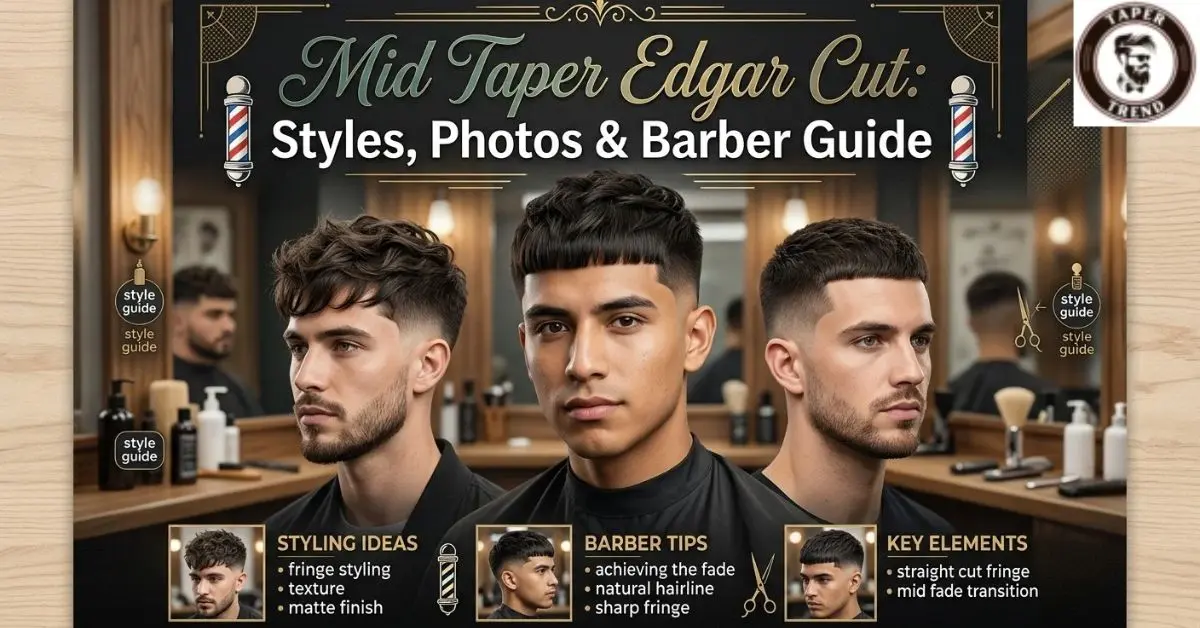
Mid Taper Edgar Cut: Styles, Photos & Barber Guide
The Mid Taper Edgar pairs a blunt forward fringe with a temple-height taper for a balanced, high-definition shape.
This Mid Taper Edgar barber guide covers what the cut is, which Mid Taper Edgar styles suit your hair, how to brief your barber, how to style it, and what upkeep to expect. Read it before you commit.
The Quick Version
- The blunt, forward fringe makes it an Edgar; the temple-height blend makes it a Mid Taper Edgar.
- Taper height and shortest length are separate choices.
- Straight dense hair gives the sharpest line, while wavy hair and curly hair need a softer version.
- Expect a barber visit every 2–3 weeks.
What Is a Mid Taper Edgar?
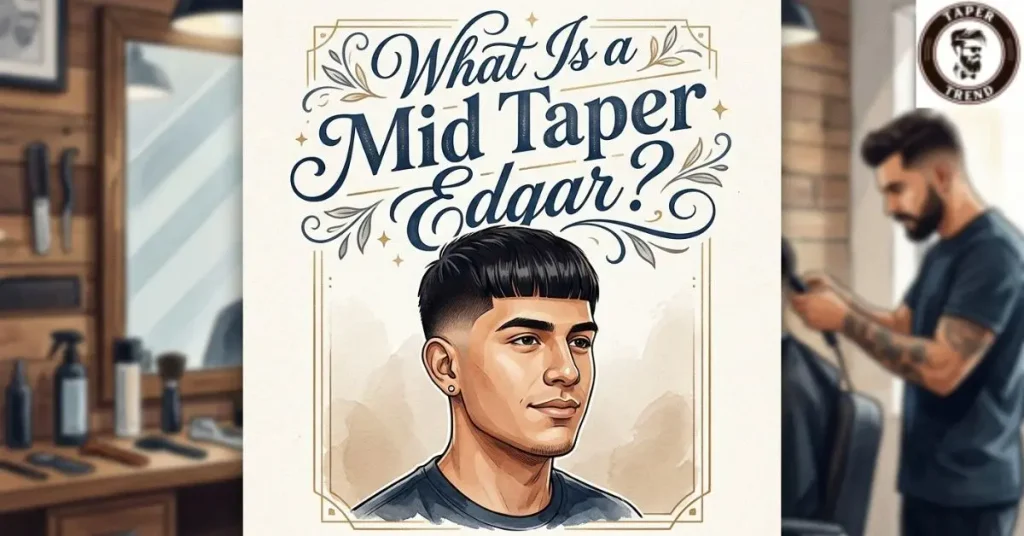
A Mid Taper Edgar, also called a mid taper fade Edgar or mid fade Edgar, is an Edgar haircut with the side transition starting around the temples. The result is a mid taper Edgar cut with a rounded shape on top and a clean, compact top above a temple taper fade. The Edgar haircut for men is defined by the blunt fringe.
The Edgar haircut mid taper only controls how much side contrast sits below it. Change the taper placement and you still have a Mid Taper Edgar; change the fringe and you do not.
The mid taper fade sits between a low taper and a high taper. It leaves more hair on the upper sides than a high taper and shows more contrast than a low taper. For the placement decision on its own, see our mid taper fade guide.
👉Read More: Textured Mid Taper
What Makes an Edgar an Edgar?
The fringe does, not the fade height. Every Mid Taper Edgar has a hard, forward-styled front line over a top with enough weight to sit forward. This blunt fringe Edgar look sits straight across above the eyebrows, a point the CADMEN Barber Academy and Modern Barber both stress.
Texturizing through the top stops the rounded shape from turning into a plain bowl. A clean line-up around the fringe, temples, and hairline finishes the cut.
That combination of fade work and line-up precision is why the Edgar fringe haircut looks simple in Edgar cut photos but is not simple to execute.
Terminology and Cultural Context
The Mid Taper Edgar belongs to the wider Edgar haircut tradition, which is closely tied to Latino and Mexican-American youth culture in the US Southwest. It is also called the takuache and the cuh.
The origin of the name is disputed, so treat the competing stories as folklore. The Los Angeles Times has covered the cut’s place in contemporary youth style. Our Hispanic / Mexican taper fade guide gives wider context.
👉Read More: Mid Taper Fluffy Fringe
What Does the Mid Taper Change?
It changes contrast and side bulk, nothing else. The shortest length can be a bare skin finish (a skin fade), a short guard, or a soft shadow. Sideburns normally match the sides.
The neckline can be a tapered neckline or a blocked neckline, and the line-up can be natural or enhanced. Taking the bottom to skin is optional, not part of the definition. If you are weighing finishes, our low vs mid vs high skin fade comparison shows where each stops.
Mid Taper Edgar vs Low Taper, High Taper and French Crop
The Mid Taper Edgar keeps the same fringe at every height. Only contrast changes.
| Style | Placement | Fringe |
|---|---|---|
| Low taper Edgar | Near the ears | Blunt |
| Mid Taper Edgar | Around the temples | Blunt |
| High taper Edgar | Above the temples | Blunt |
| French crop | Variable | Softer, textured |
A French crop shares the short-sided structure but uses a softer fringe instead of a ruler-straight line. Placement conventions differ between barbers, so bring a photo and show where the transition should begin.
Our low taper fade guide and high taper fade guide show the two neighboring heights. If the sides curve around the ear, you want a burst fade Edgar. If the fringe is separated into pieces, you have a textured fringe, or a drop fade textured fringe when the line dips behind the ear.
👉Read More: Mid Taper Blowout Fringe
Is a Mid Taper Edgar Right for Your Hair and Face?
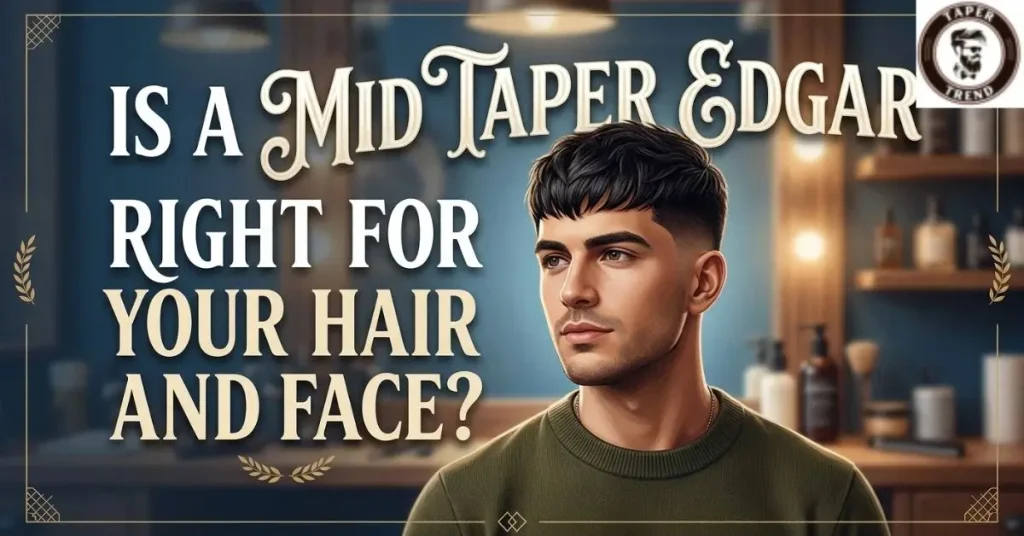
Almost anyone can wear it with the right adjustments. Hair density and texture decide how geometric the fringe looks.
Straight dense hair falls forward naturally and holds the sharpest line, but regrowth shows fastest.
Wavy hair can hold the shape, though a flat fringe usually means blow-drying most days.
Curly hair and coily hair do not sit flat without heat, so a modified Mid Taper Edgar with a rounder, textured fringe works better. Plan for curl shrinkage: the same length reads shorter when dry, so go longer at the front.
Fine or thin hair needs retained length and light texturizing so the front looks solid. Avoid heavy thinning.
Face Shape and Growth Patterns
- Round face: a hard horizontal line adds width, so use a slightly longer top.
- Long face: the horizontal fringe often flatters; avoid extra height.
- Cowlick: the Mid Taper Edgar with a cowlick works if you leave extra length or layer lightly around the growth pattern.
- Receding hairline: a softer fringe line is more forgiving.
Not sure about your proportions? Try our face shape detector.
👉Read More: Mid Taper Blowout
Mid Taper Edgar Styles to Consider
Barber portfolios list dozens of Edgars, but the Mid Taper Edgar styles come down to three outcomes.
Classic blunt Mid Taper Edgar. A dense straight fringe, minimal layering, a flat top, and a crisp outline. It photographs cleanly but needs the most touch-ups.
Fluffy or textured Mid Taper Edgar. The blunt front stays, but the barber adds lift through the crown with point-cutting. It forgives extra days of growth and sits close to a mid taper fade textured fringe.
Curly or wavy Mid Taper Edgar. The fringe follows the curl, the top keeps length so the pattern shows, and the sides are tapered as normal.
How to Ask Barber for Edgar Cut
Knowing how to ask your barber for an Edgar cut means saying the name, specifying five decisions, and showing photos. Here is what to say to your barber for an Edgar cut:
“I want a mid taper starting around the temples, finished at a short guard, with about an inch on top, a blunt fringe above the eyebrows, a clean line-up, and a tapered neckline.”
- Taper placement: say mid, around the temples.
- Shortest length: bare skin, short guard, or soft shadow.
- Top length: about one to two inches is common.
- Fringe: fringe length and fringe position, ruler-straight or slightly broken.
- Outline: natural or enhanced, tapered or blocked.
Bring two or three photos on hair like yours: front for the fringe, side for the taper height, back for the neckline. Our barber brief generator and clipper guard size chart (which explains guard numbers) help you prepare.
👉Read More: Mid Taper Buzz Cut
What Happens in the Barber’s Chair
- Consult and section: confirm all five decisions.
- Fade the sides: set the guideline at temple height.
- Cut the top and fringe: establish the front line.
- Blend: guideline blending with clipper-over-comb work until the transition is continuous.
- Dry, texture, outline: refine with shears, then clean the neck and sideburns.
If the fringe or side height looks wrong after drying, say so before you stand up.
How to Style a Mid Taper Edgar
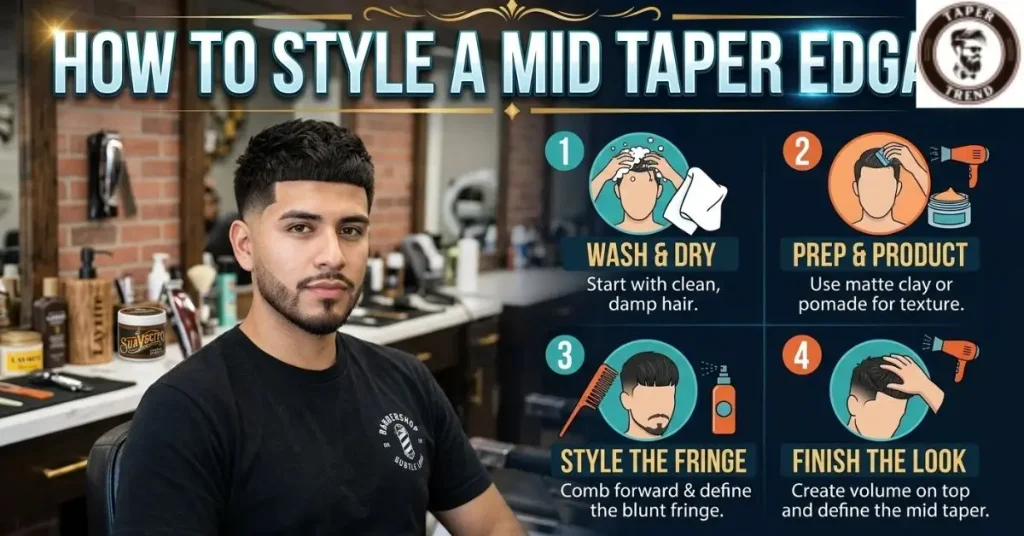
Dry the top in the direction you want the fringe to fall, then use just enough product for hold and finish.
Straight hair: blow-dry forward while slightly damp, then work in a small amount of matte paste or clay. Too much product flattens the shape.
Wavy or curly hair: apply a light cream to damp hair, then diffuse or air-dry. A little texture powder at the roots adds lift. Skip heavy pomade, which blurs the front line.
Our taper fade styling guide covers product amounts and refresh routines in more detail.
How Often to Get a Mid Taper Edgar
Plan a barber visit every 2–3 weeks. The American Academy of Dermatology puts average hair growth near six inches a year, but on hard lines even small regrowth softens the fringe and exposes the taper. A bare skin finish and a higher contrast both show grow-out sooner. The fringe usually needs attention first.
Between visits, keep the top styled and trim only obvious flyaways. Do not run clippers over the taper yourself. If the blend looks stepped, book touch-ups earlier.
Downsides and Common Mistakes
The Mid Taper Edgar is not low maintenance.
- Curving the fringe: breaks the flat line.
- Too much top length: the shape reads like a grown-out crop.
- Stopping the blend early: leaves a visible step.
- Skipping reference photos: the barber has to guess.
- Going skin-close on reactive skin: a short guard is often kinder.
Very short hairs can curl back into the skin and cause razor bumps and ingrown hairs, especially on coarse or curly hair. If irritation keeps recurring, ask for a short guard, and seek medical advice if bumps persist.
Alternatives to the Mid Taper Edgar
If the hard front line is the problem, a French crop with a softer fringe keeps the short sides. A textured crop softens the front further. A plain mid taper with no defined fringe suits anyone who wants clean sides and nothing up front.
Final Thoughts
A Mid Taper Edgar comes down to two decisions. The blunt forward fringe is fixed; the taper height and shortest length are yours to set against your hair, face, and tolerance for upkeep. Bring front, side, and back photos, specify temple placement and fringe sharpness, and budget for a visit every 2–3 weeks.
FAQs:
What is a Mid Taper Edgar?
A Mid Taper Edgar is an Edgar haircut with a blunt forward fringe and a taper that starts around the temples. The fringe makes it an Edgar, and the temple-height blend makes it a mid taper. The top keeps enough length to hold the rounded shape.
Is a Mid Taper Edgar the same as a mid fade Edgar?
Mostly yes. Both describe an Edgar with the side transition near the temples. Barbers place the height slightly differently, so bring a photo and show exactly where the Mid Taper Edgar should begin.
Can you get a Mid Taper Edgar without going to skin?
Yes. Going to bare skin is optional, not part of the definition. You can finish a Mid Taper Edgar at a short guard or a soft shadow. A short guard is often kinder if your skin gets razor bumps or ingrown hairs.
Does a Mid Taper Edgar work with curly hair, fine hair, or a cowlick?
Yes, with adjustments. Curly hair needs a rounder, textured fringe and a longer front to allow for curl shrinkage. Fine hair needs retained length and light texturizing. A cowlick needs a little extra length or light layering around the growth pattern.
How often does a Mid Taper Edgar need maintenance?
Plan a barber visit every 2–3 weeks. A Mid Taper Edgar is built on hard lines, so even small regrowth softens the fringe and shows through the taper. Between visits, keep the top styled and book touch-ups earlier if the blend looks stepped.