

Taper Fade Buzz Cut: 30 Best Styles for Men
A Taper Fade Buzz Cut is one of the cleanest, lowest-effort men’s haircuts you can get. The top stays buzzed to one short length, while the sides and back fade down gradually at the edges.
The result is a military-short cut with a modern, finished outline. This guide covers every popular taper fade buzz cut, from guard numbers to face shapes, so you know exactly what to ask your barber.
What Is a Taper Fade Buzz Cut?

A buzz cut is a hairstyle where the sides, top and back are cut extremely short, usually by running clippers over the whole head to create a uniform length.
It became popular as a military haircut, and recruits at boot camp were famously buzzed on arrival. Streetwear fans later adopted the buzz cut fade, turning a disciplined look into a statement of individuality.
A taper fade buzz cut adds a gradual fade to the sides, sideburns and nape. This gives the buzz cut hairstyle a sharper, more modern shape. Because a buzz cut is a family of closely related cuts rather than one haircut, the taper fade buzz cut works as a flexible base for almost any version.
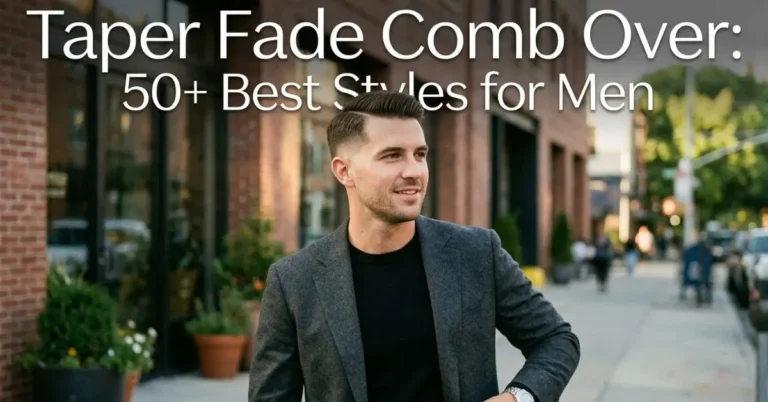
👉Read More: Taper Fade Comb Over
Taper vs Fade: What Is the Difference?
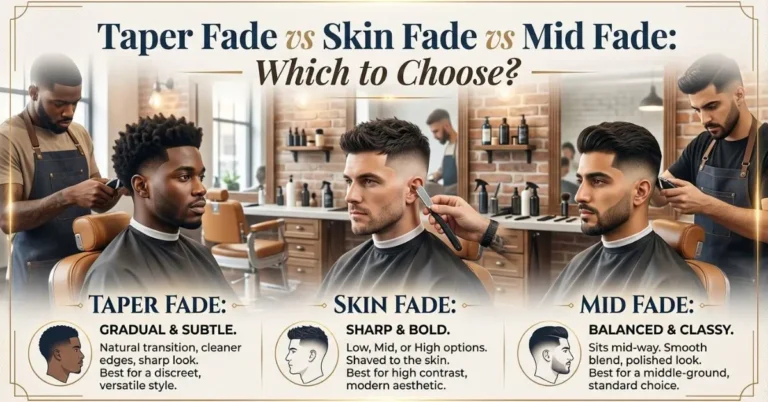
People often use these words interchangeably, but they are different. A taper is a gentle, natural decrease in length, kept mostly around the ears and neckline, and it leaves the natural hairline visible.
A fade blends the hair higher up the head, often down to skin, and looks more dramatic and abrupt.
A taper fade buzz cut combines both ideas: a subtle, controlled blend with a buzzed top. If you ask for a fade and expected a taper, the result can be a shock, so always clarify with your barber. In short, a buzz cut taper keeps more side length and reads subtle, while a buzz cut fade has stronger contrast. The taper is the more conservative, professional-friendly choice.
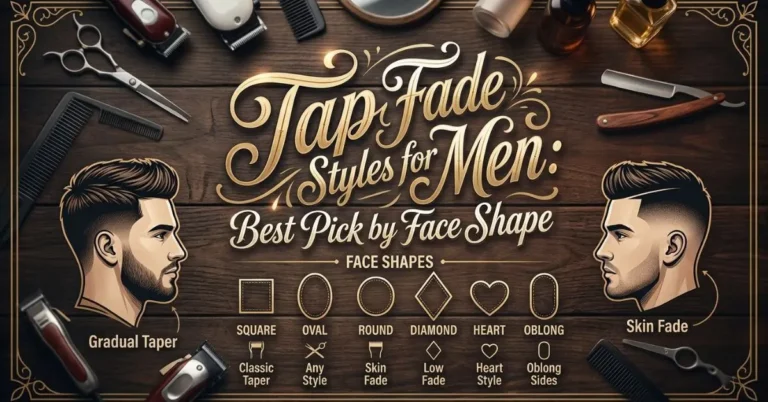
👉Read More: Taper Fade Styles
Taper Fade Buzz Cut by Fade Placement

The first decision is where the fade starts on the head. This one choice changes how bold your taper fade buzz cut looks.
1. Low Taper Buzz Cut
A low taper buzz cut keeps the fade close to the hairline around the ears and neck. Most of the side length stays, so the finish is subtle and professional. It is the most office-friendly taper fade buzz cut because the contrast is gentle.
2. Low Skin Fade Buzz Cut
The low skin fade takes the shortest section just above the ears and drops it toward the nape before graduating smoothly to the longest section.
A low blend point lets a barber “stretch out a fade,” which means the zero blade does not go very high. It is sharp, full of character and needs almost no styling. It suits oval and round faces, but it can accentuate a longer face.
3. Mid Taper Buzz Cut
A mid taper starts the fade halfway between the ear and the temple. It gives more visible contrast than a low taper and suits almost every face shape, which is why barbers use it most.
The mid fade is the most versatile buzz cut for men. The only exception is thinning hair on top, where the shape is less flattering.
4. High Taper Buzz Cut and High and Tight
A high taper takes the fade near the temples, so the focus lands on the buzzed top. The high and tight pushes the blend point to around temple height and keeps the top very short, which elongates the face and slims the cheeks.
Darker hair makes the contrast pop, and clean blending matters a lot here. Diamond and round faces wear it well.
5. Jarhead Buzz Cut
The jarhead takes the zero section right up to the temple with an abrupt contrast between skin and hair, often called a quick fade. The top is usually a guard 2 or 3. The blunt line can grow out awkwardly and needs frequent trips to the barbershop, so many barbers don’t recommend it.
👉Read More: Taper Fade Styles
More Taper Fade Buzz Cut Variations

Drop Taper Buzz Cut
A drop taper dips lower behind the ear and follows the natural hairline toward the nape. It adds a contoured line at the back and flatters a rounder head.
Burst Taper Buzz and Boosie Fade
A burst taper curves the fade in a semicircle around the ear instead of running straight down. The boosie fade uses a similar curved approach if you want a reference for the shape. Both soften the transition and give a rounded, modern outline.
Temple Taper Buzz
A temple taper only cleans up the corners at the front hairline. It is the most minimal taper option, ideal if you want tidy edges without a full fade.
Taper Buzz with a Skin Finish and Blocked Neckline
Taking the bottom of the taper down to skin, with a skin nape at the back, gives a crisp edge. It grows out faster, so expect a refresh closer to every two weeks. A blocked neckline squares off the back instead of tapering naturally, and it works best on thicker, straight hair.
Faded Top Blend and Graduated Guard
A faded top blend gradually joins the buzzed top to the sides, so there is no hard line where the lengths meet. A graduated guard uses a slightly longer guard at the crown and a shorter one at the sides to build subtle shape, which suits a flatter head shape.
👉Read More: Taper Fade
Tapered Buzz Cut vs Uniform Buzz Cut
A uniform buzz cut uses one clipper guard, often a 2 or 3, all over. It can create an awkward silhouette unless you have good bone structure, and the sides grow faster than the top, which leaves uneven regrowth.
A slight taper or fade on the sides and back grows out much more neatly, which is why the tapered buzz cut is the better choice for most men.
Classic Buzz Cut Styles to Know

Before choosing your taper fade buzz cut, it helps to know the main buzz cut styles.
- Triple zero buzz cut: named after the triple 0 blade, it takes the hair to near-bald stubble, smooth all over. It suits thinning hair and needs cutting very often. A zero shave is similar and leaves a near-bald finish.
- Induction buzz cut: the traditional military look, with a 0.5 or 1 guard all over and no fading. You need some hair density, because shaving very short on sparse hair makes you look balder.
- Burr cut: slightly softer than an induction cut but still very short.
- Butch cut: a more balanced buzz cut with extra length on top and more coverage.
- Classic crew cut: short sides with a little more length and structure on top, often a #3 or #4 guard on top faded into a #1 or #2 on the sides.
- Brush cut: a buzz cut grown out slightly, which gives a soft, feathered look. It can be brushed to one side with a matte product or powder.
- Disconnected buzz cut: also called an undercut, it has no blend between the long top and the short sides. It is a head-turner, though not the most formal.
- Textured crop buzz: very short sides with enough on top to spike up and forward. A mid skin fade on the sides pairs with a longer guard on top, and a barber can use point cutting with scissors to add texture.
- Buzz cut with a beard: the shaved head pairs well with closely buzzed facial hair. Taper the nape and sideburns, then fade the beard in for angles and the look of higher cheekbones.
Buzz Taper with Detailing
Once length and fade are set, detailing personalizes your taper fade buzz cut.
- Line-up: a line-up squares off the front hairline and temples with a mini-trimmer and finishes with a razor blade. It is the most common add-on. Keep it natural, because the line-up should start at the centre of the forehead to avoid pushing the hairline back.
- Edge-up and beard connection: fade the sideburn directly into the beard so the cut and beard read as one shape. Match the beard fade height to the hair taper.
- Hard part: a single razored line adds structure. One clean part looks timeless.
- Shaved design: a razor design works best on a low or mid taper that leaves room for it. Bring a clear reference.
- Subtle notch: a small notch at the temple adds personality without the commitment of a full design.
- Blowout taper with a textured fringe: if you want length, this keeps clean sides but adds volume on top.
Buzz Cut Lengths Explained: Guard Numbers
Many bad buzz cut experiences come from not knowing which guard to ask for. Each number adds roughly an eighth of an inch.
| Guard | Approx length | Best for |
|---|---|---|
| #1 | About 1/8 inch | Very short, lowest upkeep, even hairlines |
| #2 | About 1/4 inch | Popular all-rounder, shows colour and texture |
| #3 | About 3/8 inch | Softer look, better coverage, thinner hair |
| #4 | About 1/2 inch | Visible texture and movement, most styling room |
A half guard or zero guard gives the shortest induction-style buzz taper. It shows the head shape clearly, so it suits an even hairline. A number 4 guard buzz cut borders on a brush cut and offers the most styling flexibility.
So what guard number is a buzz cut? Anything from a triple zero up to about a #4 falls under the buzz cut umbrella. A #1 or #2 gives the classic close-crop look, while 3 or 4 starts drifting into crew cut territory.
If it is your first buzz cut, a #2 or #3 is the safest starting point. Ask for a slightly longer guard than you think you want. You can always go shorter next time, but you cannot add length back, and a buzz feels shorter in person than in photos.
Best Taper Fade Buzz Cut by Face Shape
- Round face: a high and tight or a higher taper with a slightly longer top adds height and lengthens the face.
- Diamond face: a mid fade balances the cheekbones.
- Oval face: a low skin fade suits oval faces well.
- Triangle face: an induction buzz cut works nicely.
- Square face: a tapered buzz cut or clean mid taper plays up the strong jawline and bone structure.
- Circle face: a tapered buzz cut or low skin fade adds structure.
- Long face: leave slightly more length on top so the cut does not feel too severe.
Overall, the best buzz cut for men depends on how the shortness shows off your cheekbones, jawline and head shape.
Taper Fade Buzz Cut by Hair Type and Situation

Thinning hair: a buzz cut is one of the best options for thinning hair. A uniform short length reduces the contrast between sparse and dense areas, so receding areas look deliberate. A 2 or 3 guard avoids exposing too much scalp, but you still need enough density.
Receding hairline: the short, even length makes a receding hairline far less noticeable. Soften or skip a hard line-up at the temples.
Curly hair and coily hair: a 3 or 4 guard on top shows the curl pattern as tight texture. On coily hair, the top can be sponged into short twists or curls while the sides stay tapered.
Straight thick hair: it stands up evenly for a dense, clean finish. The taper keeps bulk at the sides under control.
Gray or salt-and-pepper hair: a taper fade buzz cut on gray hair looks sharp and modern and needs no product.
Dark hair: it gives stronger colour contrast, so the fade pops.
Scars, flat spots and uneven growth: a short cut shows more of the scalp, so choose your variation carefully, perhaps with a slightly longer guard.
How to Maintain a Taper Fade Buzz Cut
Buzz cut maintenance is real, even though styling takes under two minutes and usually needs no product.
- Refresh every 2 to 3 weeks to keep the taper and line-up sharp, and sooner with a skin finish.
- Shave or clip at least once a fortnight if you have a plain buzz. Wait longer and you get the dreaded “tennis ball” fuzz regrowth. A skin fade line-up may mean a weekly freshen-up.
- Touch up your neckline at home with a trimmer between visits, cleaning the back and around the ears. This extends the sharp look.
- Moisturize your scalp with a light scalp moisturizer to stop a very short buzz looking dry or flaky.
- Styling: at a 4 guard length, you can brush or sponge the top for texture. Otherwise, no product is needed.
Can you do a buzz cut at home? Yes, you can run a single guard over your head easily with clippers. Clean tapers, fades and necklines are better left to a barber, so get the initial cut professionally and maintain it yourself. A foil shaver gives a smooth finish quickly for a near-bald look.
How to Tell Your Barber What You Want
Give your barber three things: the guard number for the top, the taper height, and the finish at the bottom. For example: “number 2 on top, low taper, take the bottom down to skin and add a line-up.”
Mention the blend point, sideburns and neckline too, and bring a photo. If you have never worn one, ask for a longer guard first.
Buzz Cut vs Crew Cut: What’s the Difference?
Historically, a buzz cut meant a uniform length across the whole head, while a crew cut kept the back and sides shorter and the top slightly longer, roughly a #4 on top faded into shorter sides. Today the terms overlap, but a crew cut has more shape on top, and a buzz cut fade is shorter overall.
When a Taper Fade Buzz Cut Is Not the Right Choice
- You want volume or length: a buzz is short by definition. Try a blowout taper instead.
- You want to hide scalp irregularities: choose a slightly longer crop.
- You dislike frequent barber visits: a grown-out scissor cut holds its shape longer.
Final Thoughts
The right taper fade buzz cut comes down to three choices: how short the top is, where the taper sits, and what edges you want at the bottom.
Tell your barber the guard number, taper height and whether you want a line-up, and you will leave with exactly the cut you pictured. It is the cleanest, lowest-effort way to look sharp, as long as you keep up with regular refreshes.
FAQs:
What is a taper fade buzz cut?
A taper fade buzz cut is a men’s haircut with a short, uniform buzzed top and sides and back that fade gradually around the ears, sideburns and neckline. It gives the classic buzz cut a sharper, more modern outline with very little styling.
What is the difference between a taper and a fade on a buzz cut?
A taper is a gentle, natural decrease in length, kept mostly around the ears and neckline. A fade blends the hair higher up the head, often down to skin, so the contrast is stronger. If you want a subtle, professional look, ask for a taper. If you want a bolder look, ask for a fade.
What guard number should I ask for on a taper fade buzz cut?
A #2 guard is the most popular because it shows a hint of hair colour and texture while staying very short. A #1 is shorter and shows more scalp, while a #3 or #4 leaves more coverage and texture. If it is your first buzz cut, start with a #3, because you can always go shorter next time.
How often do I need to refresh a taper fade buzz cut?
Visit your barber every 2 to 3 weeks to keep the taper and any line-up sharp. If you have a skin finish at the bottom, you may need a refresh sooner. Between visits, a quick neckline touch-up with your own trimmer helps the cut last longer.
Does a taper fade buzz cut suit thinning hair and all face shapes?
It suits most face shapes, especially oval, diamond and square faces, and it is one of the best cuts for thinning hair. The short, even length reduces the contrast between sparse and dense areas. For a round face, a higher taper with a slightly longer top adds height and balances the width.


2 Comments