
Taper Fade Haircut: Styles & What to Ask Barber
A Taper Fade Haircut is a clean, modern men’s haircut where the hair gradually shortens from the top down to the neckline, nape, and sideburns.
The taper fade haircut keeps length on top and blends the sides into a smooth, polished outline. Unlike bold fades, a low taper fade haircut delivers a soft, natural transition that suits any setting, from the office to a casual weekend.
A taper fade haircut is one of the most trending men’s hairstyles in 2026. It works on straight, wavy, curly, thick, and fine hair, and it pairs well with almost every top style. Below are the best ideas, barber tips, styling steps, and maintenance advice for your next taper fade haircut.
Taper vs Fade: What’s the Difference?

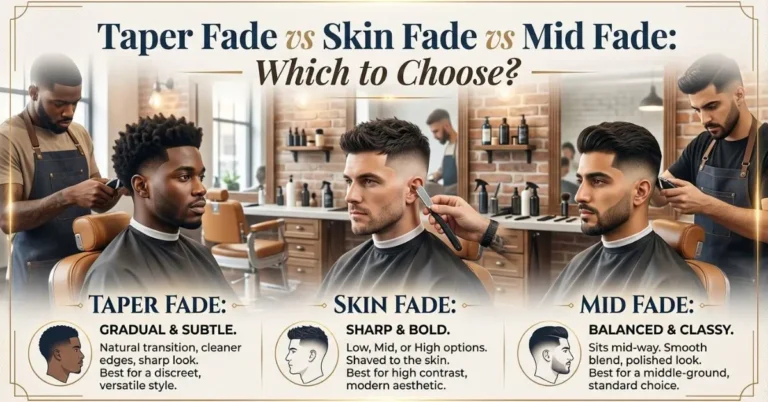
The taper vs fade debate comes down to contrast. A taper gradually shortens the hair, and it stays visible at the neckline and around the ears. A fade blends higher and can go down to bare skin, creating stronger contrast.
| Feature | Taper | Fade |
|---|---|---|
| Transition | Gradual and smooth | Sharp and defined |
| Shortest length | Hair stays visible | Can reach skin |
| Contrast | Low to moderate | Moderate to high |
| Look | Professional, conservative | Modern, fashion-forward |
| Touch-up | Every 3-4 weeks | Every 2-3 weeks |
A taper is like a dimmer switch, while a fade is a sharp cutoff. A taper fade haircut combines both: the gradual blending of a taper with the clean finish of a fade. That is why the taper fade haircut is considered the safest, most versatile choice for men.
👉Read More: Taper Fade
Low Taper vs Mid Taper vs High Taper

Low taper vs mid taper: A low taper keeps the fade near the neckline and ears for a softer, laid-back look. A mid taper sits higher and gives a sharper finish with more structure.
Low taper vs high taper: A high taper begins near the temples, so the contrast is bolder. A low taper fade haircut is subtle and works best for conservative workplaces.
Low taper vs low fade: A low taper leaves more length, while a low fade blends down to skin right at the hairline.
Low taper vs taper fade: A taper fade haircut cuts closer to the skin for a sharp look. A low taper leaves more length for a softer blend near the ears and neckline.
Types of Taper and Fade Haircuts
Taper types: low taper, mid taper, high taper, skin taper, bald taper, classic taper, short taper, blended taper, shadow taper, and the tapered neckline. A tapered neckline is the most common finishing touch because it grows out gracefully.
Fade types: low fade, mid fade, high fade, drop fade, low drop fade, mid drop fade, high drop fade, skin fade, bald fade, burst fade, shadow fade, and taper skin fade.
A drop fade curves down behind the ear and suits curly and wavy hair. A mid drop fade vs mid fade comes down to that curve: the drop fade follows the head’s shape lower toward the nape.
Trending Low Taper Fade Haircut Styles

Every taper fade haircut below keeps the sides short and the top styled for texture, volume, and movement.
Low Taper Fade
The classic taper fade haircut keeps the taper low near the ears and neckline while the top stays full. Blow-dry the fringe upward and shape it with texture clay for a tousled finish.
Low Taper Fringe and Textured Fringe
A forward-pushed fringe adds volume and edge. This taper fade haircut works best for oval or heart-shaped faces. The low taper textured fringe uses a choppy fringe with a matte finish.
Low Taper Haircut and Low Taper Short Hair
A natural fade at the neckline with a short top gives a sharp, no-fuss, low-maintenance taper fade haircut.
Low Taper Mullet
A modern mullet blends retro flair with a soft taper near the neckline and voluminous length at the back. It is a bold, edgy taper fade haircut for oval, round, or heart-shaped faces.
Low Taper Curly Hair

Curls on top bring bounce while the low taper keeps the sides sharp. Apply curl styling cream to damp hair and use a diffuser.
Low Taper Fluffy Hair
The sides taper low around the ears while the top stays long and airy. Finger-dry upward and finish with texture powder.
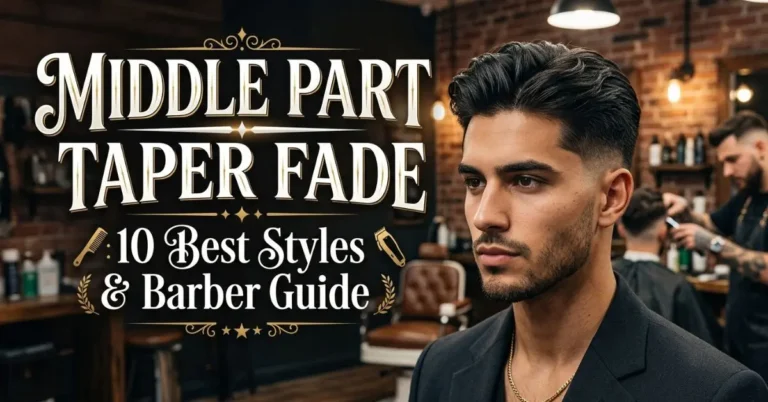
Low Taper Curtains and Low Taper Middle Part
Curtains have a middle part with soft, face-framing layers. Blow-dry forward and finish with styling cream for a lived-in finish.
Low Taper Textured Crop and French Crop
The top stays short, thick, and choppy. A taper fade haircut with a French crop adds a forward fringe, a soft taper, and a structured, youthful edge.
Low Taper Man Bun
Short, clean sides fade near the ears while the long top is tied into a neat bun, or a topknot.
Low Taper Pompadour and Slick Back
The front lifts high and flows back for strong volume. Use pomade for shine or molding paste for flexible hold. A low taper slick back is timeless and polished.
Low Taper Straight Hair
Straight hair shows blending clearly. Use thickening spray for volume, then texture clay for a matte hold.
Low Taper Black Male, Afro, Waves, Dreads, and Braids

A low taper for a Black male features a clean fade at the temples and neckline with thick natural curls on top.
A low taper afro keeps the dense volume untouched. Low taper waves, including 360 waves, need a wave brush and durag daily. Low taper dreads and low taper braids keep edges crisp while hydrating argan oil protects the scalp.
Low Taper Blowout and Blowout Fringe
A bold blowout gives airy volume on top with a clean taper at the neckline. The blowout fringe adds messy, forward-styled waves.
Low Taper Edgar and Messy Fringe
The Edgar cut has a blunt, textured fringe with a crisp taper. The messy fringe is a casual, choppy alternative.
Low Taper Buzz Cut and Crew Cut
A buzzed top flows into a smooth low taper. The crew cut has an even top length and a clean, structured finish.
Low Taper Long Hair
Long layers on top bring natural movement. Use texture spray before blow-drying.
Low Taper Burst Fade, Skin Fade, and Drop Fade
The burst fade curves around the ears. The skin fade goes tight to the skin for contrast. The drop fade curves behind the ear with a rounded neckline.
Low Taper Design and Mohawk
A creative hairline design is carved into the fade, and the mohawk concentrates volume along the center.
Low Taper Comb Over, Undercut, Side Part, and Back View
The comb over is classic and refined. The undercut adds sharp contrast. The side part guides volume and flow. The back view shows how the fade blends into messy, voluminous layers.
Low Taper Asian, Blonde Hair, and Perm
For Asian hair, thick texture on top gives youthful movement. Blonde highlights add dimension to soft curls. A perm adds defined curls and bounce.
Low Taper for Thin Hair and Thick Hair
A low taper fade haircut removes bulk from thick hair. On thin hair, it makes the top appear fuller by focusing volume there.
How to Choose the Right Taper Fade Haircut
By Hair Type
- Straight hair: A classic taper fade haircut with a side part or slick back looks sharp because the smooth texture highlights the blending.
- Wavy or curly hair: Choose a low taper or drop fade that frames the natural curl pattern. Work with a barber who understands your curls.
- Thick or coarse hair: A taper fade haircut removes side bulk. Ask for thinning shears or texturizing if the sides feel heavy.
- Fine or thin hair: Choose a low taper. It avoids exposing too much scalp and keeps hair looking full.
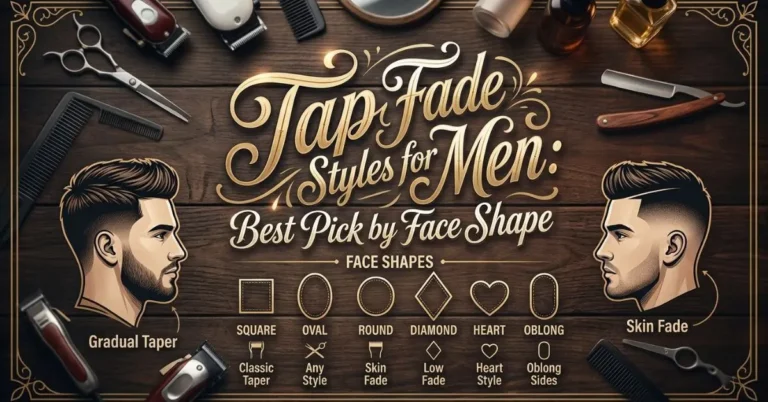
By Face Shape
- Round face: A high taper adds structure and elongates the face.
- Oval face: Almost any taper fade haircut works because proportions are balanced.
- Square face: A classic or low taper softens the jawline.
- Heart-shaped and diamond face: A low or mid taper keeps balance and sharpens the jawline.
- Oblong or long face: Choose a low taper and avoid very high styles that add vertical length.
- Triangle face: A textured top with a low taper adds balance.
Choosing the right taper height and top length highlights your best features and improves symmetry.
How to Ask Your Barber for a Taper Fade Haircut
A perfect taper fade haircut depends on clear communication at the barbershop.
- Bring a reference photo. Show the front, side, and back so your barber sees the exact taper height and top style.
- Be specific about the taper. Don’t just say “give me a taper.” State where it starts (near the neckline or above the ears) and how short the sides should be.
- Mention guard numbers. A clipper guard size chart helps. A #1 guard on the sides is a common request.
- Describe the top. Say whether you want a fringe, side part, crop, or quiff, and whether to use shears for texturizing.
- Discuss edges. Ask about the line-up, shape-up, razor line, and whether you want a tapered neckline or a blocked one.
- Share maintenance needs. Tell your barber how often you can visit and what products you use.
A barber brief generator can build a card with these details. Remember to tip: a barber tip calculator helps with haircut, beard trim, or line-up totals.
How to Style a Taper Fade Haircut

- Prep your hair. Wash with shampoo and conditioner, towel-dry until slightly damp, then apply sea salt spray for volume and control.
- Apply a styling product. Use pomade for sleek looks and texture clay or matte clay for a natural finish. Spread evenly from roots to tips.
- Use a blow dryer. Lock in shape with a round brush or fingers. Use a diffuser for curls and a vented brush for a comb over.
- Finish the style. Seal with light-hold hairspray or argan oil for shine and frizz control. Refresh with texture powder during the day.
Choose a lightweight hold for fine hair and a flexible hold for thick hair. A matte finish looks natural, while a sleek finish is more polished.
Best Styling Products for a Taper Fade Haircut
- Texture clay: Strong hold with a matte finish.
- Molding paste: Medium, flexible hold with light texture.
- Styling cream: Smooths frizz and adds hydration.
- Texture powder: Lifts roots and adds separation without buildup.
- Sea salt spray: Adds a windswept, beach-inspired texture.
- Pomade: Sleek control and shine.
- Hydrating argan oil: Nourishes hair and adds healthy shine.
- Clarifying shampoo: Removes product buildup and refreshes the scalp.
- Thickening spray, texture spray, and mousse: Build volume before styling.
- Curl cream: Defines curls and maintains moisture.
- Strong hold gel and wax: Use for control, but avoid heavy products that look stiff.
- Beard oil and beard balm: Keep a faded beard soft and healthy.
How to Maintain a Taper Fade Haircut
Regular barber visits: Visit your barber every 2 to 4 weeks. A taper grows out evenly and stays presentable for three to four weeks, while a fade loses crispness in about two weeks. Routine trims keep the neckline and sideburns clean.
Daily upkeep: Wash your hair two to three times a week instead of daily. Use a clarifying shampoo weekly to prevent product buildup. Trim the neckline weekly if needed.
Scalp care: Keep the scalp moisturized and clear of razor bumps. If you have scalp issues, ask for a shadow fade rather than a skin fade to camouflage flaws. Moisturize exposed skin for skin-friendly upkeep.
Low-maintenance vs high-maintenance: A low taper fade haircut is low-maintenance because it grows out gracefully. A skin fade is high-maintenance and needs frequent touch-ups.
Is a Taper Fade Haircut Professional?
Yes. A taper fade haircut is a corporate-friendly, office-friendly style. It leans conservative and polished, which suits suits, crisp shirts, and tailored looks.
A low fade can also look professional, and in creative workplaces fades are widely accepted. For casual settings, a textured top or messy fringe keeps the look relaxed.
Final Thoughts
The taper fade haircut remains one of the best men’s hairstyles in 2026 because it is clean, versatile, and easy to wear.
Whether you choose a low taper fade haircut with curls, a fringe, a pompadour, or a buzz cut, match the taper height to your hair type and face shape, bring a reference photo, and keep up with regular touch-ups. Use the right styling products and your taper fade haircut will stay fresh, sharp, and confident.
FAQs:
What is a taper fade haircut?
A taper fade haircut is a men’s style where the hair gradually shortens from the top down to the neckline and sideburns. It keeps length on top and blends the sides into a clean, polished finish that can stay subtle or go closer to the skin.
What is the difference between a taper and a fade?
A taper shortens the hair gradually and keeps visible hair at the neckline and ears. A fade blends higher and can reach bare skin, so the contrast is stronger. A taper fade haircut combines the soft blend of a taper with the clean finish of a fade.
How do I ask my barber for a taper fade haircut?
Bring a reference photo and say where you want the taper to start, such as near the neckline or above the ears. Mention the guard number for the sides, the style you want on top, and whether you prefer a tapered or blocked neckline.
How often should I get a taper fade haircut?
Visit your barber every 2 to 4 weeks. A taper grows out evenly and stays neat for about three to four weeks, while a skin fade loses its sharpness in about two weeks.
Does a taper fade haircut work for all hair types and face shapes?
Yes. A taper fade haircut suits straight, wavy, curly, thick, and fine hair. It also flatters most face shapes, especially oval, round, square, and heart-shaped faces. Just match the taper height and top style to your hair and face.


2 Comments