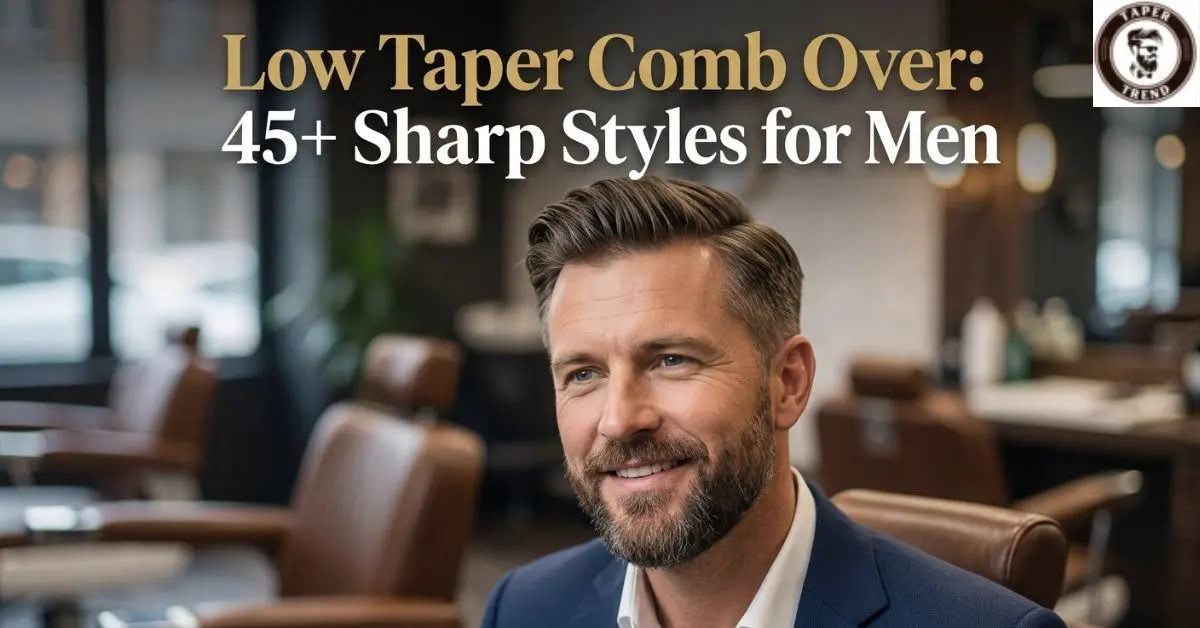
Low Taper Comb Over: 45+ Sharp Styles for Men
A low taper comb over is a clean, professional haircut that pairs a neat, side-swept top with a low taper fade around the ears and neckline.
The sides stay soft and tidy, while the top keeps enough length to be combed over in one direction. It works for the office, school, weddings, and everyday wear, which is why the low taper comb over is one of the most requested low taper fade haircuts for men.
This guide covers what a low taper comb over is, how it compares to other fades, 45+ style variations, barber wording, styling, maintenance, and cost.
What Is a Low Taper Comb Over?
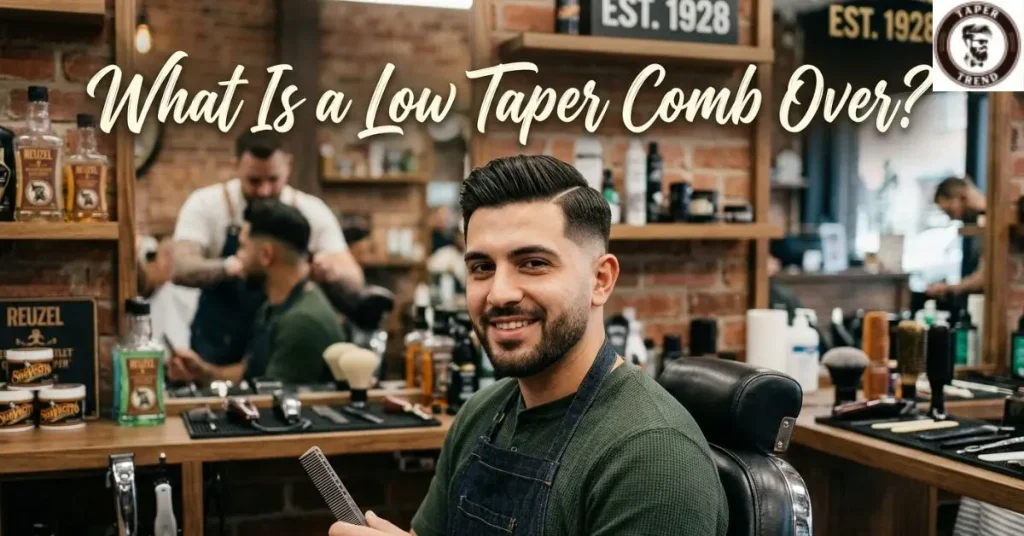
A low taper comb over combines two things. The first is a low taper fade, where hair slowly shortens near the temples, sideburns, ears, and neckline. The second is a comb over, where longer hair on top is swept to one side, usually with a defined part.
The result is a polished shape with soft edges and no harsh lines. Barbers blend the hair to create smooth transitions, then customize the top length for your hair type and personal style. A low taper comb over suits short hair, medium hair, and even longer hair.
Low Taper Comb Over vs Other Fades
👉Read More: Low Skin Taper
Low taper fade vs high taper fade. A low taper fade is subtle and clean near the nape and ears, ideal for a refined, mature look. A high taper fade starts above the ears and creates striking visibility, which suits rebellious styles like a faux hawk or messy fringe. For a comb over, the low version looks more professional.
Low taper fade vs mid taper fade. A mid taper fade starts around the middle of the side of the head. It stands out more and adds volume, which suits messy or curly styles. The low taper comb over stays calmer and easier to maintain.
Low taper vs low fade. A low taper only shortens hair at the edges and neckline. A low fade removes more hair on the sides for a bolder contrast. Choose the taper if you want a softer finish.
Related terms to know: a skin taper blends down to the skin, a shadow taper is softer and darker, a burst fade curves around the ear, and a drop fade follows the curve behind the ear.
A low drop taper fade curves low around the ears and neckline for a contoured finish, while a low temple taper fade focuses the blend near the temple and sharpens the face outline. The taper-fade mullet and curly-hair taper are creative alternatives for people who want something different.
Why the Low Taper Comb Over Works

- Clean and professional: the defined part and tidy sides look sharp in formal settings.
- Easy to wear: it suits most face shapes and ages.
- Flexible: it works with short hair, wavy hair, thick hair, and longer lengths.
- Low maintenance: the low taper grows out gracefully compared with a high fade.
👉Read More: Low Taper Fade Back
Low Taper Comb Over Styles by Hair Type
Low taper fade short hair. A short, textured top combed to the side gives a fresh everyday look. It is perfect for school and work.
Low taper fade wavy hair. Keep natural waves on top, comb them to one side, and let the sides taper softly around the ears without taking off too much bulk.
Low taper fade straight hair. Straight hair gives the cleanest comb over lines. A neat part and smooth flow make the shape look sleek.
Low taper fade curly hair and low taper with a curly top. Curls add volume to a comb over. Use curl cream and a diffuser to define the shape, and keep the sides tapered so the curls stand out. A broccoli style with low taper fade can be combed gently to one side for a softer version.
Low taper fade fluffy hair. A fluffy top gives natural volume. A light side sweep keeps it controlled.
Afro, coily, and thick hair. An afro low taper fade or a cropped afro with a low taper can include a sharp comb-over part shaved or lined into the top. A high top with low taper fade, low taper coils with a beard, and low taper twists show how the same clean taper frames textured hair.
Low taper fade Black male, white male, and Asian. The comb over adapts to every texture. Coily hair benefits from a defined shaved part, straight Asian hair suits a light, tousled sweep with layers, and a brushed-over top with ash brown or soft golden tones works well on many white male hair types.
👉Read More: Low Taper Fade
Popular Low Taper Comb Over Variations

Classic and Professional Styles
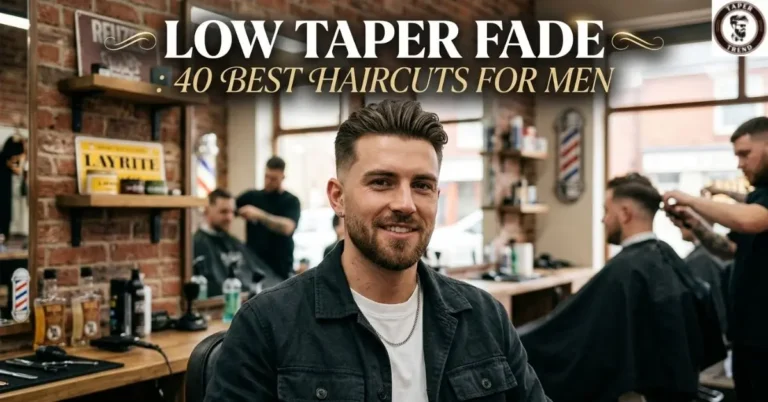
Low taper fade comb over. The standard version. The hair is side-swept with natural volume, a defined part, and soft contrast above the ears and nape. Pair it with a neatly shaped beard for a sharp finish.
Hard part with low taper. A shaved or lined part creates a deep, structured separation. It is one of the sharpest comb over looks.
Low taper fade side part. A softer side part lets the hair fall naturally to one side. Blow-dry the front up and over, then use pomade to hold the line.
Low taper fade middle part. A center part with a soft, curved flow on both sides suits a youthful, creative vibe.
Side swept short hair with a low taper. Neatly brushed to the side with soft texture and controlled volume. It is a refined, easy choice for modern gentlemen.
Low taper fade slick back. The top is brushed back instead of over, but the same low taper frames it. A clean mustache suits this polished, classic look.
Brush up with low taper and brush back with taper fade and line up. Both give a smooth, structured silhouette. A crisp line-up across the front hairline adds a geometric edge.
Long hair with low taper fade. The top is grown out and combed straight back or to one side for a sleek, glossy finish.
👉Read More: Low Taper
Volume and Texture Styles

Modern pompadour and low taper fade. A high-volume top brushed back and slightly over, with sharp, clean sides.
Low taper fade blowout. A lifted, airy top with natural flow. Use a blow dryer and round brush for lift.
Low taper fade French crop and textured French crop with low taper fade. A choppy, short top with a straight fringe. It keeps the sides tight and neat.
Low taper fade textured crop and textured crop with a taper fade. Short, choppy layers add rugged texture and a youthful look.
Low taper fade Edgar. A blunt, straight fringe across the forehead with natural texture on the rest of the top.
Fringe with low taper fade. A forward-swept, messy fringe frames the face.
Stylish spiky hair with low taper fade. Short spiked layers styled upward for a bold look.
Low taper fade perm. A perm adds bouncy curls on top for a rounded, full silhouette.
Short blonde waves with taper faded sides. Tight, defined 360 waves in golden blonde. A wave brush and pomade keep the pattern neat.
Low taper fade blonde. A layered, slightly tousled blonde top gives a bright, modern contrast.
Short, Clean, and Edgy Styles
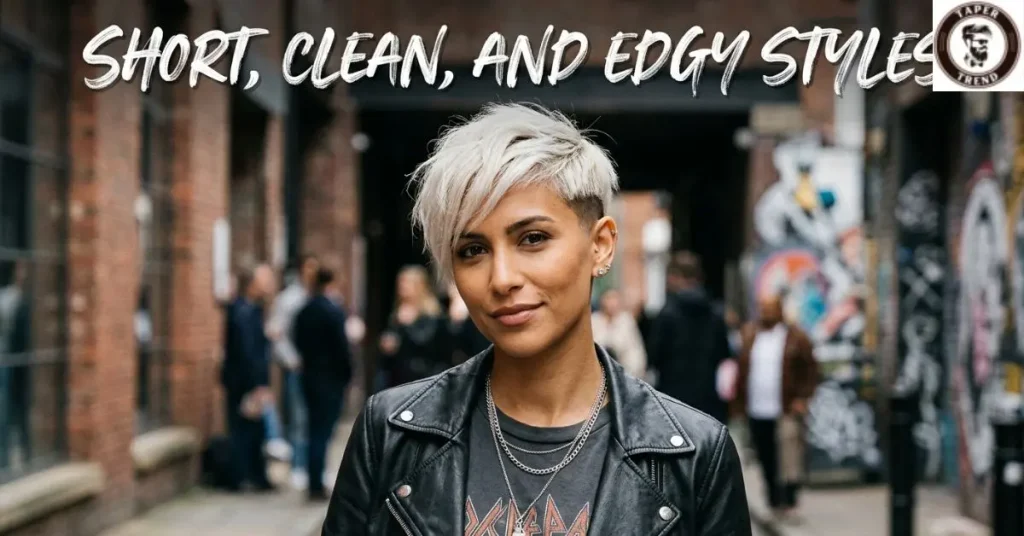
Crew cut with low taper. A timeless, easy-to-manage cut with a subtle lift on top.
Low taper fade buzz cut. A uniform, tight top with a smooth low taper. No product is needed, only routine trims.
Low taper faded undercut. A clean undercut paired with medium-length wavy hair on top.
Low taper fade mullet. Retro length at the back with a clean, modern taper around the ears and neckline.
Top knot with low taper fade and low taper fade dreads. Longer hair is tied up or styled back, while the low taper keeps the sides crisp.
Low taper fade back. Focuses on precision at the neckline, with the top left fuller.
Low taper fade with beard. The sideburn taper blends smoothly into a groomed beard for a bold, masculine look.
Best Low Taper Comb Over for Your Face Shape
- Oval: most variations work, so you can experiment with volume.
- Round: add height on top and sweep the hair to one side to create a longer, leaner silhouette.
- Square: a low taper highlights the strong jawline, and a defined part adds sharpness.
- Heart-shaped: the taper softens the wider forehead and balances a narrower jaw.
- Rectangular: keep the top controlled rather than too tall, and use side volume for balance.
In general, the low taper fade suits most face shapes because of its clean lines and balanced proportions.
How to Ask Your Barber for a Low Taper Comb Over
Avoid vague phrases like “just a fade” or “whatever works.” Mention the fade height (low, mid, or high), how you want the sides and neckline to blend, the guard length, the top length, and the part position.
Copy-and-paste script:
“I want a low taper around my temples, sideburns, ears, and neckline. Keep it low, and don’t let it climb into a mid or high fade. Start the shortest area around a #0.5 or #1 and blend up through #2 and #3. Leave enough length on top for a comb over with a [natural/hard] part on the [left/right] side. Keep the neckline clean but not too high.”
Useful add-ons:
- For a hard part: “Line the part with a trimmer and keep it narrow and clean.”
- For curly hair: “Don’t over-thin my curls, and keep enough weight for a side sweep.”
- For a beard: “Blend the sideburn taper into my beard.”
Terms like “skin taper” and “shadow taper” help avoid confusion. Bring reference photos and ask for feedback, since experienced barbers can fine-tune the cut for your hair type. Do not assume your barber remembers your last cut unless you are a regular.
Choosing the Right Guard and Length

There is no single correct guard. Many barbers start with a #0 or #0.5 at the shortest point and blend through #1, #2, #3, and sometimes #4. The result depends on the clipper, lever setting, hair density, and technique.
If you want a bold, sharp look, go shorter on the sides. A medium length balances sharpness and subtlety, and a longer blend gives a more relaxed finish. Your face shape, hair texture, and daily routine should guide the decision.
How a Barber Cuts a Low Taper Comb Over
- Consultation: check the hairline, crown, density, and where the part sits naturally.
- Low taper: start around the temples, sideburns, ears, and nape.
- Blend: use #1, #2, and higher guards, adjusting the lever to remove lines.
- Clipper-over-comb: remove weight above the taper without a visible step.
- Shape the top: use scissors and point cutting for soft texture and flow.
- Create the part: a natural part follows the hair, while a hard part is lined with a trimmer.
- Refine and finish: clean the edges, check the blend from every angle, and style.
How to Style a Low Taper Comb Over

Style with a comb or brush on slightly damp hair. Use a blow dryer to lift the front up and over, then set the shape with a product that matches your hair.
- Pomade: polished hold and a smooth finish, best for classic looks and a defined part.
- Matte pomade or matte clay: texture with no shine for a modern look.
- Molding paste and styling cream: flexible, natural hold. Styling cream suits fine or thin hair.
- Texture powder: instant volume and grit, ideal for thin hair.
- Sea salt spray: apply before blow-drying to lift roots and add beachy texture.
- Curl cream and mousse: define curls and waves without crunch.
- Argan oil and leave-in conditioner: tame frizz and add shine.
- Wax or gel: stronger hold for spiky or very sleek looks.
Tools: a fine-tooth comb for sleek styles, a vent brush for volume and control, a wide-tooth comb for curls, a round brush for lift, and a diffuser for curls.
Tips: always style in the direction of hair growth and the fade to maintain structure. Layer products lightly to avoid buildup, and use your fingers to tousle and separate sections for a more relaxed finish.
Hair Color and Facial Hair Ideas
Color adds dimension to a comb over. Honey, auburn, ash brown, golden, platinum blonde, deep brown, and jet black each change the mood. Soft highlights make texture stand out, while jet black adds shine to a slicked finish.
Facial hair completes the look. A well-groomed beard, goatee, light stubble, mustache, or chin strap can balance the cut. Keep the edges where the sideburn tapers into the beard smooth for a seamless connection.
How to Maintain a Low Taper Comb Over
A low taper fade typically lasts 4 to 6 weeks before it grows out and loses sharpness. For a crisp comb over, visit your barber every 2 to 3 weeks for a quick trim. Regular touch-ups keep the gradient clean and prevent overgrowth.
Between visits:
- Use a precision trimmer to tidy the neckline and sideburns, following the natural fade line.
- Wash your hair 2 to 3 times a week with a gentle clarifying shampoo to avoid dryness.
- On non-wash days, rinse with water and add a leave-in conditioner or a few drops of oil.
- Lightly dampen and restyle each morning with a comb or brush.
- Do not try to recreate the part or taper yourself. One uneven pass is hard to fix.
Common Mistakes to Avoid
- Taper too high: it stops looking like a low taper comb over. Say clearly how low you want it.
- Too little length on top: you need enough hair to actually comb over.
- Heavy product: it makes the top stiff or greasy.
- Ignoring your cowlick or crown: the part should follow natural growth.
- Vague instructions: skipping details like sideburn shape, neckline, and guard length often leads to disappointing results.
- Skipping touch-ups: the comb over looks neat only when the sides stay clean.
How Much Does a Low Taper Comb Over Cost?
The cost of a low taper fade varies by location and barber experience. A hard part or detailed line-up may add a small extra fee.
Average price by region:
- Small towns: $20–$35
- Urban areas: $40–$60
- High-end salons or big cities: $70+
Barbershop vs salon: barbershops usually offer faster, budget-friendly fades. Salons may charge more but often include scalp massages, washes, and styling advice. In both cases, expect professional clipping, blending, shaping, and expert advice on maintenance and product use.
Final Thoughts
The low taper comb over is a rare haircut that looks professional, stays versatile, and is easy to maintain. Whether you choose a classic side part, a hard part, a textured crop, a curly top, or a longer slick style, the low taper keeps the edges clean and the overall shape balanced.
Pick your style based on hair type and face shape, tell your barber exactly how low the taper should stay, and book regular touch-ups. With the right cut and the right product, your low taper comb over will look sharp every day.
FAQs:
What is a low taper comb over?
A low taper comb over is a haircut that pairs a soft, gradual fade around the temples, ears, and neckline with a longer top combed to one side. The sides stay clean and subtle, while the top keeps enough length to hold a neat part.
How do I ask my barber for a low taper comb over?
Ask for a low taper around the temples, sideburns, ears, and neckline, and say clearly that it should stay low. Then explain your top length, which side you want the part on, and whether you prefer a natural part or a hard part (a shaved or lined part). A reference photo helps a lot.
How long should my hair be for a comb over?
You usually need around 2 to 4 inches (5 to 10 cm) on top so the hair can be swept to one side and hold its shape. Shorter hair can still work with a textured side sweep, but longer hair gives a cleaner, more defined comb over.
How often should I get a touch-up?
Visit your barber every 2 to 3 weeks to keep the taper and part looking sharp. A low taper usually starts to lose its clean shape after 4 to 6 weeks, especially around the neckline and sideburns.
Which face shapes suit a low taper comb over?
It works on most face shapes. Oval faces can wear almost any version, round faces benefit from a bit of height on top, square faces look more structured with a defined part, and heart-shaped faces gain balance from the soft taper.




4 Comments